

I'm done with retroactive appreciation
Old nomadic wolves, "La Città di Pianura" and passing through life


Not long ago I watched a film that left me a little shaken. Thoughtful. Melancholic, in a way I couldn’t quite trace back to its source. Cinema itself doesn’t contain emotions; it merely evokes them. Which means that if something stays with you after the credits roll, it’s because of you—your history, the dog you had as a child whose death first taught you what grief felt like, your parents’ messy divorce, or the abandonment you experienced during your first heartbreak.
What’s on screen is nothing more than a mean little kid with a stick, swinging wildly. Most of the time he misses. But every now and then—very rarely—he lands a blow exactly where you never expected to be hit, on a day when you thought you wouldn’t have to deal with anything remotely like that. That’s the magic of cinema—and storytelling in general. That fucking kid. The one I’d happily slap across the face and snap his stick in half. Wonderful.
The film revolves around a road trip that lasts only a couple of days. Two old friends, permanently drunk, always having “one last drink.” They know how to savour life’s small pleasures. They laugh, and they make you laugh. It’s genuinely hilarious. And yet there’s this quiet melancholy humming beneath it all. The life that could have been and never was, mostly sacrificed at the altar of relentless hedonism.
I don’t want to spoil the film, and this isn’t meant to be a film review anyway. But it presents two sides of the same coin. Hedonism—the endless chase for one last drink, one last trip, one last high, whatever form it takes—has its obvious appeal. The question is: when do you stop?
That’s where the kid with the stick caught me right in the eye. The little bastard.
To Stand in Awe
I’ve said countless times that I love simple solutions to complex problems. The other day I came across one, recommended by Arthur C. Brooks.
Brooks argues that, in order to be happier, we need to shift from being the constant object of observation to becoming an observer:
“The trick for well-being is balancing your I-self and me-self. But most of us spend too much time being observed and not enough time observing. We think constantly about ourselves and how others see us; we look in every mirror; we check our mentions on social media; we obsess over our identities.”
Hrvoje Šimić’s latest article made me think about this too. He shares a similar intuition when he says he’s grown tired of all the navel-gazing he’s subjected himself to over the past few years and wants to turn his attention back to the outside world.
I couldn’t relate more.
Sometimes introspection doesn’t illuminate us—it hollows us out.
Brooks suggests one way out of that loop: to stand in awe.
Maybe that’s why the protagonists of the film, despite having so little by so many standards, manage to have the time of their lives over the course of forty-eight hours spent drifting from one bar to the next. They genuinely appreciate what’s in front of them: a cold beer, a slice of prosciutto, a shrimp cocktail. Simple pleasures.
So why did I walk out of the cinema feeling so profoundly sad? Because the protagonists reminded me of the old nomadic wolves I've met throughout my life.
Old nomadic wolves
There’s a particular type of person who has always fascinated me—and, to a lesser extent, repelled me. I don’t know why, but I’ll call him the old nomadic wolf.
I met my first old nomadic wolf six years ago on a road trip through Bulgaria. We were sitting in a beach bar in Varna. It was summer. Good music was playing, we were drinking cold beer, and a man in his sixties overheard us speaking Spanish and struck up a conversation.
I can’t even remember where he was from anymore because he belonged to the world more than to any country. He spoke six or seven languages—he casually threw in a few sentences in Catalan, which impressed me—and lived from hostel to hostel. He worked as a graphic designer. He drifted from bar to bar, from woman to woman, from drink to drink.
Even back then, at eighteen, I had mixed feelings.
Part of me thought it was extraordinary that this man exercised his freedom so completely, living exactly the life he wanted, outside the script everyone else seemed to follow. That part of me admired him.
The other part couldn’t stop asking the uncomfortable question:
What are you still doing here?
Shouldn’t you have put down roots by now?
Since then I’ve met countless old nomadic wolves, in every shape and form.
I make a real effort not to judge the way anyone chooses to live. Most of the time I succeed. But I struggle with the old wolves. Because they awaken something in me that’s frighteningly familiar.
Fuck, am I gonna be one of them in 30 years time?
The Nomadic Self
It’s in the title, folks. The whole reason this Substack exists is my desire to face uncomfortable truths through writing. One of the biggest ones is that I can’t stand fucking still.
Whenever life starts asking something permanent of me, I get the urge to leave. I’m a cliché with legs, I know.
Almost two years ago, I found myself in a situation not unlike the one I’m in now. I was in the Balkans, broke, paying cheap rent, trying to write something that might shake someone up.
The biggest difference is that back then I lived with the constant anxiety of missing out on life. I never really gave Athens a chance. It’s not that I regret leaving, but I can’t honestly say I ever lived in Greece—and that still pains me.
I was just passing through, the same way I passed through Newcastle, London and Edinburgh, no matter how long I stayed in each place. Or maybe it wasn’t the same way at all.
What bothers me about Greece isn’t that my time there was temporary. It’s that I was never fully there. My mind was always exploring alternative ways of living. A little more acceptance would have brought so much lightness. Had I surrendered to the reality around me, I’d have appreciated the movie nights, the cats that came to visit us, the wonderful flat I was living in, all the delicious spanakopitas, the views from Lykavittós.
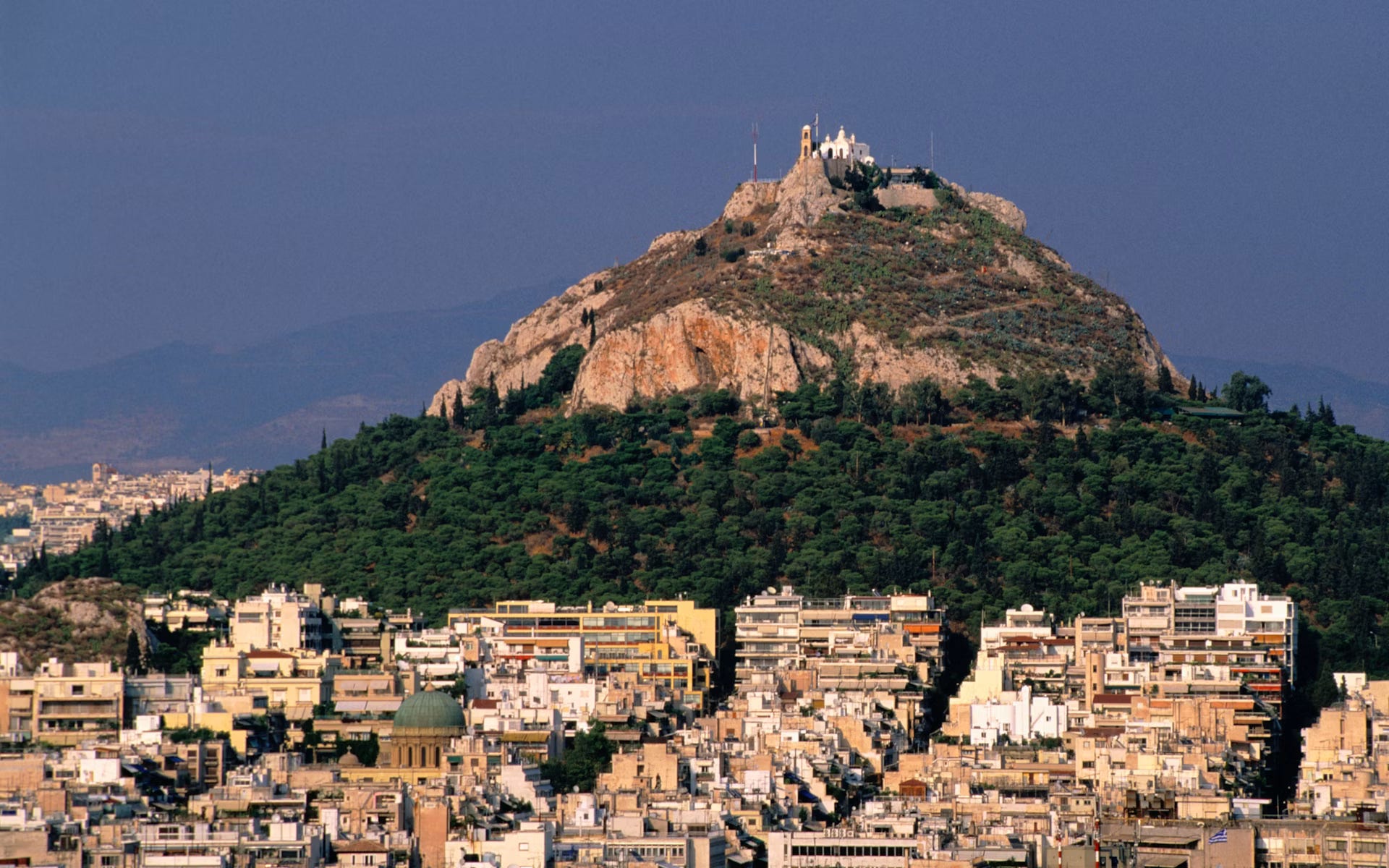
And that’s the main difference with my current situation. I’m done with retroactive appreciation. What’s in front of me? What can I be thankful for today?
I'm in Ljubljana. I don't think I'll stay forever. But for now, this is where I come back to. I have a few commitments — my flat contract, the job in a hostel I have for the summer — that force me to embrace the reality around me.
Where a couple of years ago I saw a prison, I now see liberation. When I come back home after a long day of work and I ride through Tivoli Park at full speed or I go for a drink with one of the guests I'm reminded of how good it feels to be alive. I'm learning to stand in awe.
Making a living. Meeting people from all over the world. Getting to create every day. All this nature around me. It’s enough. I can stop searching for now.
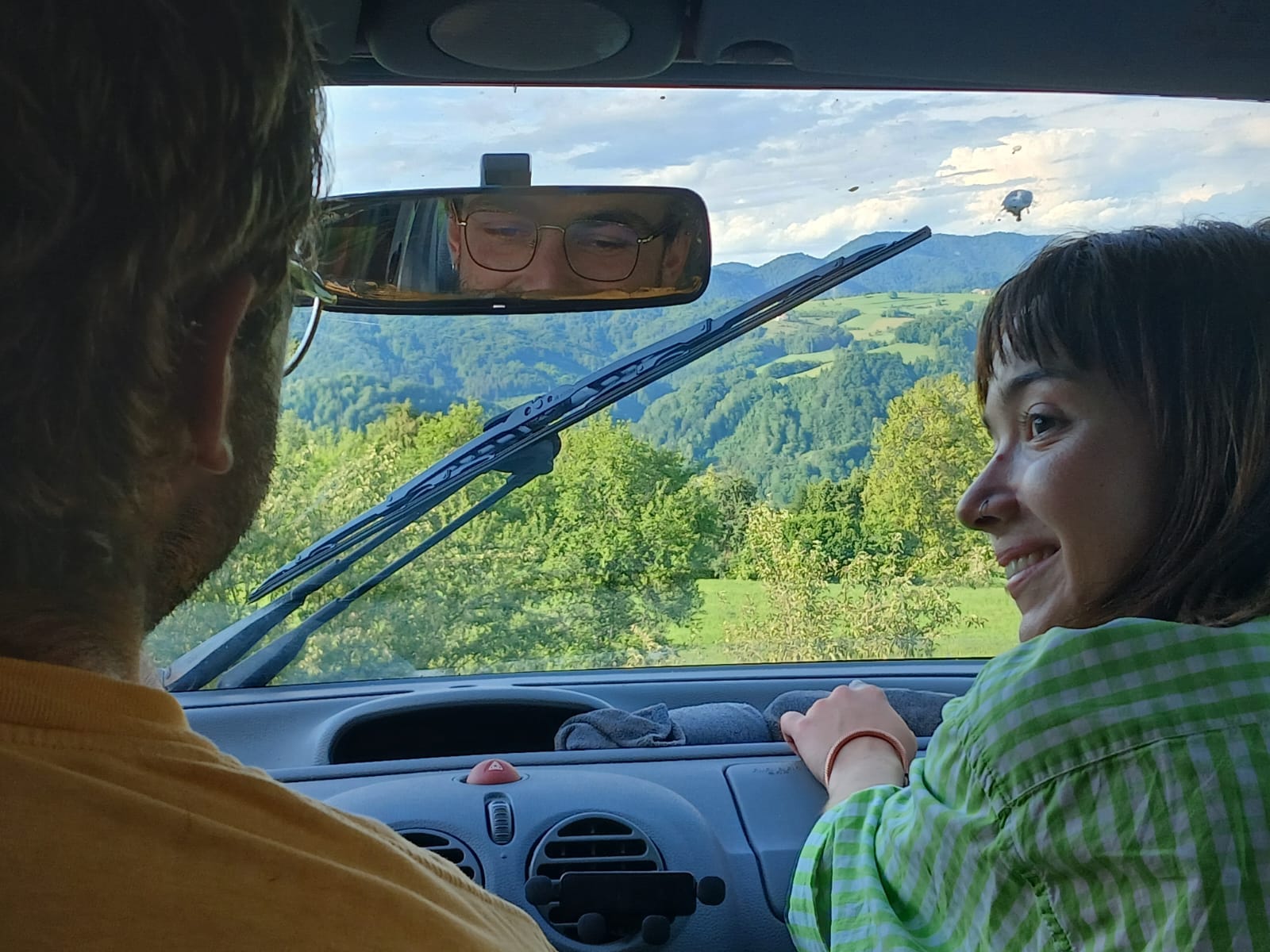
We’re all just passing through in one way or another. Maybe the problem isn’t moving on. I think it’s more about not letting fear decide when you do.
That’s the distinction I’m still trying to figure out.
What do you guys think? I'd love to hear your thoughts in the comments.
Like a sunrise or sunset, anything so ephemeral. Just like our life - we appear and we disappear and we are so important to some, but, we are just passing through.
-Before Midnight (2013)
First of all, thank you Marc for mentioning my latest post. This is the first time I'm seeing this on Substack so it means a lot to me. I find it criminal that Substack didn't notify me that this happened (another example of how ridiculous a platform it is).
Secondly, your post gave me so much ideas and I would like to cover them properly, to give them some more time, this time I have until the end of the month, which is why this is going to be the subject of my next post. They say that the best art is the one that inspires the birth of more art. The film you have watched did precisely this for you. And your post did the same for me. I've been in a writing slump this month and your post has taken me out of it like a bolt of lightning. Thank you for that. I'll now do my best and try to write a coherent response.